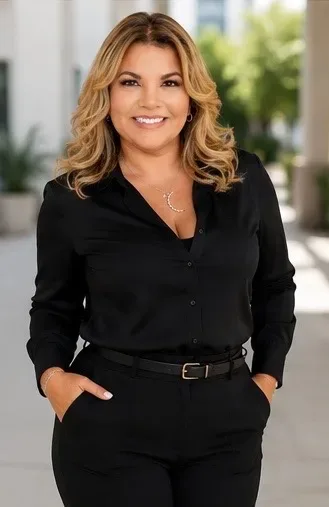
A Personal Note from Diana
Let's Talk About the Money Part
Almost every first-time buyer I sit with has the same worry: "I know I need a down payment, but what else do I owe at closing?" It is a fair question, and in Florida the answer can feel like a second down payment if nobody walks you through it. That is exactly why I want to explain it here, calmly and in plain English.
I'm Diana Austin, a bilingual Realtor with Fig Team EXP Realty LLC, serving Cape Coral, Fort Myers, Estero, Bonita Springs, and Naples. My job is to make sure you are never blindsided by a number. We will go over what closing costs are, what the averages look like in 2026, and the exact questions to ask so you walk into closing with your eyes wide open and your budget intact.
"Nobody should fall in love with a house and then discover the cost of getting the keys. Preparation turns uncertainty into confidence, and that is what I am here for."
What's Inside This Guide
What Closing Costs Really Are
Closing costs are the one-time fees and expenses you pay to complete a home sale, on top of your down payment. They cover everything it takes to process your loan, verify the property, transfer the title, and record the sale with your county. Think of them as the cost of getting the paperwork done right: someone has to check the title, underwrite the mortgage, and file the deed.
They are separate from your down payment
Your down payment is equity you bring to the table. Closing costs are fees for the services and taxes involved in the transaction itself. In Florida both are due on the same day, which is why people lump them together, but it helps to track them separately.
Buyers and sellers each pay their own set
This is the misconception that causes the most confusion. Buyers pay lender, title, tax, and recording costs tied to their loan. Sellers typically pay the deed doc-stamp tax, the owner's title policy, and the real estate commissions. Neither pays the other's list, though concessions can shift some costs.
They vary by price, loan, and county
No two closings are identical. Your purchase price, loan type, down payment, lender, and even the county where the home sits all change the final number. That is why a range is more honest than a single figure, and why your Loan Estimate is the document that matters.
You see them long before closing day
By law, your lender gives you a Loan Estimate within three business days of your application, and a Closing Disclosure at least three business days before closing. The numbers can move between those two documents, but only by small, explainable amounts. You are never surprised at the table itself.
Here's the honest takeaway: closing costs are not a trap or a penalty. They are the price of a clean, legal, protected home purchase, and every dollar shows up on a disclosure you get to read in advance. The key is knowing they exist, planning for them, and asking the right questions early.
How Much Buyers Actually Pay in Florida
In 2026, a financed home buyer in Florida typically pays closing costs of roughly 2% to 5% of the purchase price, on top of the down payment. On a $400,000 home, that works out to about $8,000 to $20,000. Cash buyers pay less, usually around 1% to 2%, because they skip lender fees and loan-related taxes entirely.

Financed Buyer
2% to 5%
of the purchase price in closing costs, excluding the down payment. Typical for most loans in today's market.
Example: $400,000 Home
$8,000 to $20,000
a realistic planning range for closing costs on a typical SWFL purchase, before any seller concessions or lender credits.
Cash Buyer
1% to 2%
of the purchase price. No loan origination, no mortgage doc-stamp tax, and usually a smaller title bill.
Why the range is wide
Your personal percentage depends on four things: how much you borrow, what kind of loan you get, which lender you choose, and where in Florida you buy. A VA loan backed by no down payment and a conventional loan with 20% down have very different cost profiles. Waterfront homes in Lee or Collier County also carry higher insurance prepaids than inland properties, which pushes the total up even when the base fees are similar.
Plan with the top of the range. Budget for 5% of the purchase price in closing costs, plus your down payment, and anything that comes in under that number is a win. If you can comfortably cover 5%, a 2% closing is a pleasant surprise. The reverse, planning for 2% and finding out you owe 4%, is how buyers end up scrambling.
Every Line Item on Your Settlement Statement
When you open your Closing Disclosure, it can look like alphabet soup. Here is each line in plain language, what it pays for, and who it belongs to.
Lender fees: origination, underwriting, and processing
Your lender charges for creating and reviewing your loan: origination (a fee for setting up the mortgage), underwriting (the review of your financial picture), and processing (the paperwork). Origination is often quoted as a percentage of the loan or a flat fee, and it is one of the few closing costs you can genuinely shop around for. Ask every lender for their total origination package, not just their interest rate.
Appraisal and credit report
The lender orders an appraisal to confirm the home is worth what you are paying, usually a few hundred dollars, bundled into your estimate or charged separately. A credit report fee covers all three bureaus and is typically small. Neither is negotiable in price, but knowing they are there stops them from being a surprise.
Title search and title insurance
A title company searches public records to confirm the seller really owns the property and there are no hidden liens or claims. In Florida, the buyer commonly pays for the lender's title insurance policy, which protects the lender, and in most counties the buyer also pays the owner's policy, which protects you, though this is negotiable in some markets. On a $400,000 loan, lender's title insurance typically lands around $700 to $1,200. Among all the fees on your list, this is the one that protects you long after closing day.
Florida documentary stamp taxes
Florida taxes real estate transfers and mortgages through doc stamps. As a buyer with a loan, you pay the mortgage note tax at $0.35 per $100 of the loan amount, so on a $320,000 mortgage that is about $1,120. The deed tax on the purchase price, $0.70 per $100, is typically the seller's responsibility. Some counties add a surtax, so your agent should confirm the local rate for the home you are buying.
Recording and settlement fees
The county clerk charges a per-page fee, roughly $10 a page, to record the deed and your mortgage, usually $100 to $400 total. The title or settlement company also charges a closing fee for coordinating signatures, funds, and the exchange of documents. These are standard, modest costs that show up on every Florida close.
What the seller usually pays
For the record, the seller typically covers the deed doc-stamp tax, the owner's title policy in many counties, and the real estate commissions. As a buyer you are not paying for the listing side of the sale. And when sellers want to close faster or a buyer's numbers are tight, the buyer can ask for a seller concession: the seller agrees to pay a share of the buyer's closing costs, within the limits your loan type allows.
Prepaids and Escrows: The Part Everyone Forgets
Here is where Florida buyers get caught off guard. Prepaids are not fees; they are paying ahead for things you will use in the first months of ownership, and in Southwest Florida that means insurance. These can rival all your other closing costs combined, especially on a coastal home.
First-year homeowners insurance
You must prepay the first year of homeowners insurance before closing, and Florida premiums are among the highest in the country. Depending on the home and location, budget $2,000 to $6,000 or more. Your lender requires proof the policy is paid, so shop this early, not the week of closing.
Flood insurance when required
If the home is in a FEMA flood zone, your lender requires flood insurance, paid ahead just like homeowners coverage. Even outside mandatory zones, many coastal buyers choose it for peace of mind. Your agent should pull the flood zone for every property you seriously consider, before you make an offer.
Property taxes and prepaid interest
You reimburse the seller for property taxes they already paid covering your days of ownership, and you pay interest on your new loan from closing day to your first payment date. Both are calculated down to the day, so closing later in the month lowers the interest prepaid.
Escrow reserves
Most lenders build an escrow account that collects a few months of taxes and insurance up front, then pays those bills for you when they come due. It is not a fee; it is savings your lender holds, and it shows up on your Closing Disclosure as a line item that sometimes confuses first-time buyers.
The insurance rule of thumb
In Southwest Florida, ask your lender and insurance agent for real premium quotes during your due diligence, not after you close. The difference between a $2,500 and a $5,500 annual policy is thousands of dollars at closing and every year after. A newer roof and impact windows can cut your premium meaningfully, so the insurance quote belongs in your earliest conversations about which home to choose.
How to Budget for Closing Costs (and Shrink Them)
You have more control over these costs than you might think. Here is the practical playbook, from the day you pick a lender to the week before closing.
Compare lenders on total cost, not just the rate
Ask two or three lenders for Loan Estimates on the same home and compare the origination fees, not just the interest rate. A slightly higher rate with a lender credit can put thousands back in your pocket at closing. The loan that looks cheapest on rate alone is not always the cheapest to close.
Ask about seller concessions
In a buyer-friendly market, sellers routinely contribute to your closing costs. Conventional loans generally allow up to 3% of the purchase price from the seller, FHA up to 6%, and VA up to 4% plus some additional fees. Your lender confirms the exact limit for your loan type, and your agent negotiates the number as part of the offer.
Check down payment and closing cost assistance programs
Florida has programs built for first-time buyers and essential workers. The Florida Hometown Heroes program offers eligible community heroes up to $35,000 toward down payment and closing costs, and many counties add their own assistance. Ask your lender what programs apply to your situation before you assume you have to pay everything yourself.
Learn about the Hometown Heroes programChoose your closing date with intent
Prepaid interest is calculated per day, so closing near month-end means a smaller interest prepayment. Property tax prorations also shift with the calendar. These are small levers, but on a $400,000 transaction they are easy to pull when the rest of the deal is settled.
Keep your down payment and closing funds separate
Your lender will ask for statements showing where your funds came from. Cash gifts from family, gifted down payments, and seasoned money each have different documentation requirements. Keep your closing cash in a savings account for several months before applying, and never move large sums around without telling your loan officer first.
Read both disclosures, then read them again
Compare your Loan Estimate to your Closing Disclosure line by line. If a fee grew by more than a small, allowed amount, ask why before you sign. Most mistakes are caught by a buyer who simply read the document, and your agent should sit beside you and explain every line you have a question about.

The paperwork works in your favor: you receive the Loan Estimate early and the Closing Disclosure three business days before closing, which means every fee on the table is one you have seen before, if you read it.
Questions to Ask Before the Closing Table
The buyers who feel confident at closing are the ones who asked questions early. Here is the list I give every client, in the order you should ask it.
What is the total of my loan origination and underwriting fees, and could a lender credit lower my cash to close?
Is the owner's title policy included in my estimate, and who is being asked to pay for it in this county?
What flood zone is this property in, and is flood insurance required by my lender?
What are the real annual costs for homeowners and flood insurance on this exact home?
Which closing costs can the seller contribute under my loan type, and how much should we ask for?
Do I qualify for any Florida first-time buyer or essential worker assistance programs?
What will I owe in property tax prorations, prepaid interest, and escrow reserves at closing?
Are there county surtaxes on the doc stamps for this property that my estimate did not include?
When should my closing cash be in the account, and what documentation will you need for it?
Walk me through every line of my Closing Disclosure so I understand what each one pays for.
And remember: there is no such thing as a dumb question at a closing table. My rule with every client is simple: if you do not understand a number, we stop and explain it before you sign anything. You should never feel rushed about your own money.
A Word From Diana
You Can Know the Numbers Before You Sign
When my husband and I bought our first home here, I remember the exact feeling of staring at the estimate and wondering what half the fees were for. That is why I make sure every client sits down with me and reads their numbers out loud before we ever reach the table. Knowledge is what takes the fear out of this process.
As first-time homebuyers shared about working with me: "We were terrified and wanted to make sure we chose someone who would truly listen. Diana was absolutely amazing. She has been incredibly knowledgeable, patient, and attentive throughout the entire process. Working with Diana was truly a blessing for our family."
Whether you are pre-approved and ready to tour, or still figuring out what is possible, I will help you understand every dollar before you commit. That is my promise, and I have got your back from the first call to the keys in your hand.
Talk to you soon,
Diana Austin
Want a clear picture of your closing costs before you buy?
Whether you're buying your first home, relocating to Southwest Florida, or downsizing, I'll help you plan your budget honestly and connect you with lenders I trust. Call, email, or schedule a time to talk.
Diana Austin • FIG Team • Fig Team EXP Realty LLC
Accredited Buyer's Representative • Waterfront Specialist • Military Relocation Specialist • Bilingual English & Spanish
FL License #3571079 • Equal Housing Opportunity