
A Personal Note from Diana
Let's Prepare Together, Not Panic
I know what hurricanes feel like from the inside. My husband and I relocated to Florida and learned the rhythms of this place the hard way, the same way most transplants do. The anxiety before a storm is real, and so is the relief that comes from knowing you did everything you could ahead of time.
I'm Diana Austin, a bilingual Realtor with Fig Team EXP Realty LLC, serving Cape Coral, Fort Myers, Estero, Bonita Springs, and Naples. Every week I sit with buyers who worry about flood zones, insurance costs, and whether an older home can take a storm. The good news is that all of these worries have answers, and most of them start with preparation you can do this weekend, not the night before a storm.
"My goal is simple: you should feel informed and protected, not scared. Preparation turns uncertainty into confidence, and that's the best gift I can give any client."
What's Inside This Guide
Where This Season Stands: A Quieter Year, Still a Real Risk
The Atlantic hurricane season runs every year from June 1 through November 30, and Southwest Florida sits squarely in the part of the Gulf and Atlantic that historically gets its share of storms. Here is where the 2026 season actually stands as of late September, so you can plan with facts instead of headlines.
The 2026 outlook is below normal
NOAA predicted a below-normal season in its spring outlook and kept that call in its August update: 7 to 13 named storms, 2 to 6 hurricanes, and 0 to 2 major hurricanes. A late-September update held those numbers and raised the odds of a below-normal finish to about 75%.
Six named storms so far, all tropical storms
As of late September, the season has produced six named storms: Arthur, Bertha, Cristobal, Dolly, Edouard, and Fay. None has made a direct hit on Southwest Florida, and no hurricane has formed in the Atlantic at all this year.
The season is not over
The heart of the season runs through late October, and storms have struck Florida in October and even November. A quiet start is good news, but it is never a promise. Forecasts describe odds, not outcomes.
History is the honest teacher
Hurricane Charley tore through the Cape Coral and Punta Gorda area in August 2004, and Hurricane Ian devastated Fort Myers Beach and Cape Coral in September 2022. Both arrived in years with active forecasts. Preparation is not about this year's forecast; it is about the coast we live on.
Here's the honest takeaway: a below-normal forecast means fewer storms to watch, not permission to skip the plan. The families who sleep best through a storm watch are the ones who prepared in June, not the ones who scrambled in September. The rest of this guide shows you exactly what to do, whether you own a home, rent one, or are shopping for one right now.
What Home Buyers Ask Me About Hurricanes
Buyers asking the right questions before they make an offer is exactly what I love to see. Here are the four questions I hear most, and the honest answers.
"What flood zone is this home in?"
FEMA flood maps divide the coast into zones, and your lender will require flood insurance if the home sits in a high-risk zone. Your agent should pull the flood zone for any property you're serious about before you write an offer, along with the elevation certificate if one exists. Elevation matters most: the height of the living area's first floor is what protects you in a storm surge, and most post-Ian builds in our coastal areas are elevated accordingly.
"Is this home storm-hardened?"
Ask about the non-negotiables: impact-rated windows and doors or shutters, the age and condition of the roof, hurricane straps tying the roof to the walls, and whether the garage door is reinforced. Florida's building code is updated regularly, and the post-Ian revisions strengthened wind-load requirements in coastal areas, so newer homes are engineered to a higher standard than anything built in the 1990s.
"How much will insurance really cost?"
This is the single most underestimated expense in coastal Florida, and the answer is different for every property. Windstorm coverage and flood coverage are separate policies, with separate deductibles. My advice: get quotes during your due diligence, not after you close. If the numbers stretch your budget, that's better to know before you commit. A good lender and an independent insurance agent can run the real numbers for you early in the process.
"New construction or resale for hurricane resilience?"
New construction is almost always built to the newest code, and impact glass and metal roofs are frequently standard in our area. A well-maintained resale built after 2002, and especially one built in the last few years, can be just as solid, often with a bigger lot and mature landscaping. The key is documentation: ask what code year the home was built to, check the roof age on the disclosure, and do a thorough inspection.
My promise as your buyer's agent
I will never let you fall in love with a house before you understand its storm story. We will check flood zones, insurance feasibility, roof age, and elevation as part of your normal due diligence, so the home you close on is a home you feel safe in. That's what protecting you looks like in practice.
The Five Steps That Actually Matter
The Florida Division of Emergency Management organizes hurricane readiness into five steps, and they are the right framework for every household, whether you've lived here for years or moved in last month.
Know your risk
Find your evacuation zone on the state's Know Your Zone map (floridadisaster.org) and check your property's flood zone on FEMA's flood map. Know the difference between storm surge, wind, and inland flooding, because the preparation and the safest response differ for each.
Make a plan
Decide in advance where you will go if you evacuate, how you will get there, and how your family will reconnect if phones go down. Include your pets in every step of the plan, along with a written list of what you'll grab: documents, medications, chargers, and irreplaceables.
Build a kit
FEMA and Ready.gov recommend enough food, water, medicine, and basic supplies for several days without power. Add a NOAA weather radio, batteries, flashlights, cash, a manual can opener, and a waterproof pouch for your important documents. Check it twice a year, on Memorial Day and Columbus Day, the bookends of hurricane season.
Stay informed
Download the FEMA app for National Weather Service alerts, sign up for your county's emergency alerts, and follow the National Hurricane Center as the source of truth. Know what the Emergency Alert System messages mean and act on them when they arrive.
Evacuate when told
If an evacuation order is issued for your zone, leave early and follow your route. Homes in surge zones are not safe places to ride out a major storm, no matter how well they are built. If you stay in a non-evacuation zone, you still need shutters, a stocked kit, and a home built to take the wind.
Storm-Proofing Your Home, Step by Step
FEMA is clear that two home improvements are the most proven damage reducers: storm shutters over exposed glass, and hurricane straps on your roof. Here is the full checklist, from the big-ticket items to the weekend projects.
Windows and doors
Impact-rated glass is the permanent solution. Accordion, roll-down, or panel shutters are the tested alternative. Doors matter too: a reinforced front door and a bracing kit for your garage door keep the envelope sealed where storms get in.
Roof and framing
Check your roof's age and condition every spring, and confirm hurricane straps or clips connect the roof to the walls. A water barrier under the shingles and sealed soffits keep wind-driven rain out, which is how most damage actually starts.
Yard and outside
Trim dead branches, remove loose gravel and debris, and bring in or secure patio furniture, grills, and potted plants before a storm. Floating debris is a storm's second weapon, and most of it comes from someone's backyard.
Document everything
Walk through every room with your phone camera and keep the video and photos off-site in a cloud folder. Do the same in a storage closet if you rent. A video inventory is the fastest way to a fair insurance settlement.
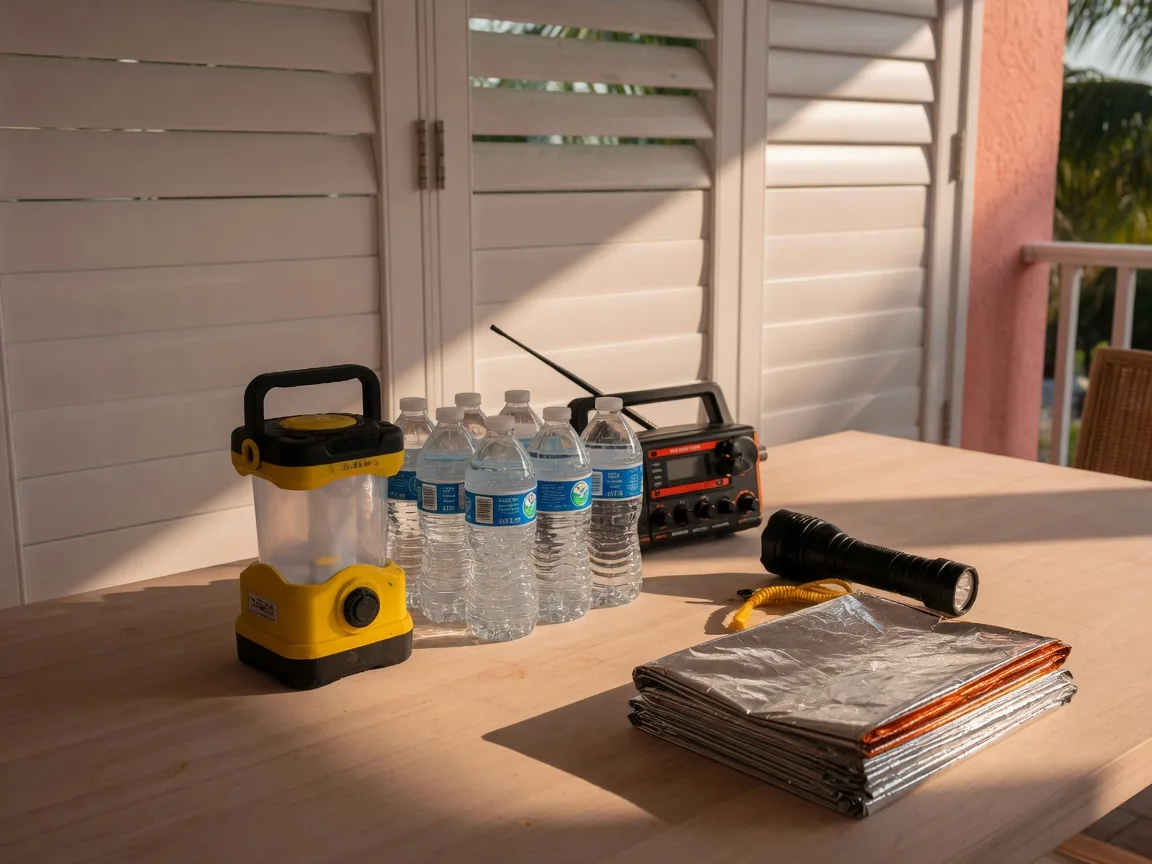
A basic storm kit is simple and affordable: several days of water and shelf-stable food, a NOAA weather radio, flashlights, spare batteries, cash, and your medications. Assemble it once, and you only have to restock it twice a year.
Insurance: What Every Owner and Buyer Should Know
Insurance is the least exciting part of coastal homeownership and the most important one. Here are the facts, stated plainly.
Flood damage is not covered by a standard policy
FEMA says it plainly: standard homeowners and renters policies do not cover flooding. Flood insurance is a separate policy, available through the National Flood Insurance Program and some private carriers. If you live in a flood zone and have a mortgage, your lender will require it. If you do not have a mortgage, it is still the coverage that protects you from the single most common storm loss in Florida.
There is a waiting period, so buy it early
NFIP flood policies typically have a 30-day waiting period before coverage starts. That means you cannot buy flood insurance on the Thursday before a storm makes landfall on Saturday. The time to buy is now, in the calm weeks of the season, not during a watch.
Know your windstorm deductible
In Florida, hurricane and windstorm coverage often carries a separate deductible, usually a percentage of your insured value rather than a flat dollar amount. Read your policy once a year, understand that number, and ask your agent what it would mean for your budget after a real claim.
Buyers: check insurance before you write an offer
Before you commit to a home, have your agent and insurer look at the flood zone, roof age, and claims history. Ask whether the seller has an elevation certificate you can review. A property with a newer roof and impact glass will often insure for meaningfully less than a similar home that lacks them, and that difference belongs in your monthly budget either way.
You don't have to figure this out alone
Part of my job is connecting you with lenders, insurance agents, and inspectors I trust, so you get straight answers instead of surprises. My preferred vendor list includes insurance professionals who work in this market every day and know which carriers are writing policies this season.
Your Week-Before Checklist
When a named storm enters the Gulf and starts heading this way, the news cycle gets loud. Here is the quiet checklist I give every client, so you can act instead of spiral.
Recheck your kit: water, food, meds, batteries, cash, and a full charge on your devices.
Refill prescriptions early and add a few extra days of anything your family or pets need.
Move important documents into a waterproof container: deed, insurance policies, IDs, and your home inventory.
Secure the yard: bring in furniture, grills, potted plants, and anything else that could become a projectile.
Fill your vehicles with gas and confirm your evacuation route and destination.
Check your shutters and confirm you know how to install them, especially if you just moved.
Download county alerts and the FEMA app, and turn on notifications for the National Hurricane Center.
Check on older neighbors and friends who may need help planning or leaving.
If you have a boat or a pool, confirm your securing plan and know your association rules for both.
Photograph your home again from room to room, then back the video up to the cloud.
And remember: if officials tell you to evacuate, nothing in this house is worth more than your life and your family's. I have got your back from the paperwork side for as long as you need me, but the call to leave is always the right call to take seriously.
A Word From Diana
You Can Feel Safe Here
When my husband and I moved to Florida, we had to learn all of this from scratch, and I remember how overwhelming it felt. I also remember the fear our family carried through our first storm watch, and the calm that came once we had a plan. That calm is available to you too, no matter how long you have lived in Southwest Florida.
As first-time homebuyers themselves shared with me: "We were terrified and wanted to make sure we chose someone who would truly listen. Diana was absolutely amazing. She has been incredibly knowledgeable, patient, and attentive throughout the entire process. Working with Diana was truly a blessing for our family."
Whether you're buying your first home, relocating from another state, or preparing the home you already own, I will help you understand the risks, protect what matters, and move forward with confidence. That is what I love doing.
Talk to you soon,
Diana Austin
Ready to find a home you feel safe and happy in?
Whether you're buying, selling, or relocating to Southwest Florida, I'll give you honest, personalized guidance and a plan that fits your life. Call, email, or schedule a time to talk.
Diana Austin • FIG Team • Fig Team EXP Realty LLC
Accredited Buyer's Representative • Waterfront Specialist • Military Relocation Specialist • Bilingual English & Spanish
FL License #3571079 • Equal Housing Opportunity